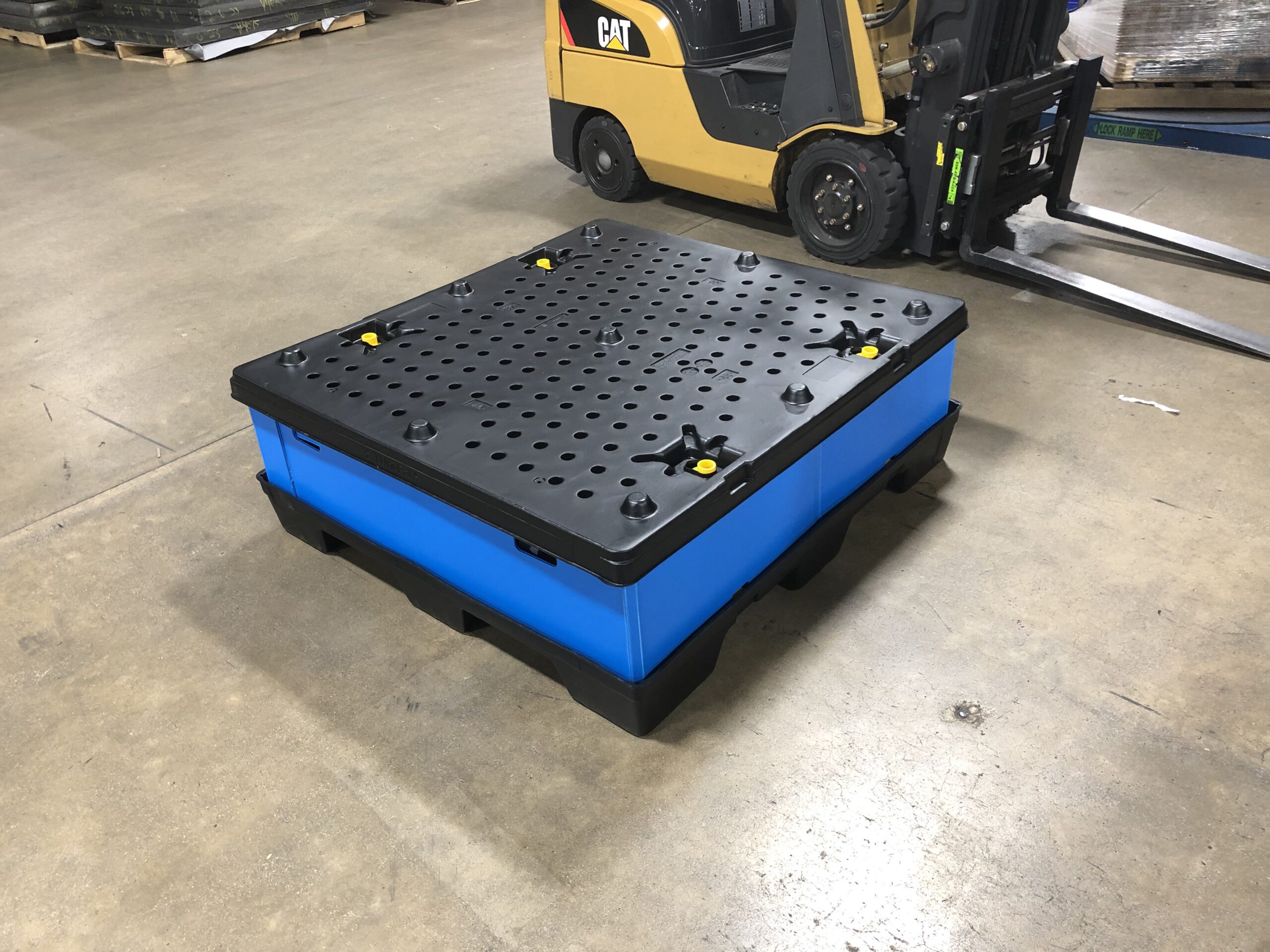
The short answer: choose returnable packaging when you have a closed loop, steady volume, high-value or cosmetic parts, and a way to get the packaging back. Choose expendable packaging when the shipment is one-way, the volume is low or occasional, the distance is long, or recovering the packaging is not practical.
The rest is knowing which of those variables applies to your program. This post gives you the side-by-side, the honest cases for each, and the handful of factors that actually decide it.
Key takeaways
- Expendable packaging is a purchase. Returnable packaging is a process.
- Returnable costs more up front and less per trip. Expendable is the reverse.
- The decision usually comes down to loop control, volume, part value, distance, and storage.
- Returnable only pays off if the packaging actually comes back.
- Many programs run both: returnable on closed-loop lanes, expendable on one-way shipments.
What is the difference between returnable and expendable packaging?
Expendable packaging is designed for a single trip and then recycled or discarded. Returnable packaging is engineered to make many trips through a closed loop between the same points.
The clearest way to think about it: expendable is something you buy over and over, so a better price or a better design gives you an opening on any order. Returnable is a process you sell into once and build a loop around. It takes more time and buy-in up front, and it pays back over the life of the program.
Returnable vs. expendable packaging, side by side
The two differ on cost timing, protection, storage, and waste more than on any single factor. This comparison holds across most industrial programs.
| Factor | Expendable packaging | Returnable packaging |
|---|---|---|
| Upfront cost | Lower per unit, minimal capital outlay | Higher, with capital invested in the fleet |
| Cost per trip | Consistent on every shipment | Low and relatively fixed per trip |
| Protection | Good for one-way; cushioning, void fill, and inserts | Higher; custom dunnage engineered to the part and repeated every trip |
| Storage | Ongoing stock of new material to hold | Reusable assets; empties returned and stored |
| Waste | One-way material to recycle or discard | Reused many times; supports closed-loop and waste-reduction goals |
| Best fit | One-way, low volume, long distance, no return path | Closed loop, steady volume, high-value or cosmetic parts |
When should you use returnable packaging?
Returnable packaging is the better choice when the same parts move repeatedly between the same points and you can get the packaging back. Choose returnable when most of these are true.
- You have a closed loop. Regular shipments run between the same supplier and the same plant.
- Volume is steady and high enough to spread the fleet cost across many trips.
- The parts are high-value or cosmetic, where custom dunnage protection matters on every trip.
- You have a way to track and return the empties, so the loop actually closes.
- Waste reduction or closed-loop goals are part of the mandate.
When is expendable packaging the right call?
Expendable packaging is the right call when the shipment is one-way or the economics of returning the packaging do not work. There is no financial benefit to building reusable packaging for a shipment that only happens once. Choose expendable when any of these apply.
- One-way or export shipments where the packaging will not come back.
- Low-volume, occasional, or one-off orders, including prototypes and first-article samples.
- Long distances where return freight erases the savings.
- No practical reverse-logistics path to recover and clean the packaging.
What actually drives the returnable vs. expendable decision?
Five variables decide it. Weigh them together rather than one at a time.
| Variable | Points toward returnable | Points toward expendable |
|---|---|---|
| Loop control | You can reliably recover the packaging | No dependable return path |
| Volume | Steady, high, repeating trips | Low, occasional, or one-off |
| Part value and cosmetic risk | High value or Class-A surfaces | Low value, damage-tolerant parts |
| Distance | Short to medium, controlled lanes | Long or one-way lanes |
| Storage and handling | Room for empties and a tracking system | Limited space or no tracking |
How do you know when returnable packaging pays off?
Returnable pays off once the packaging completes enough trips that its cost per trip drops below what you would spend buying expendable packaging over the same period. The exact point depends on the fleet size, the loop length, and the part-specific costs.
That calculation is worth doing properly rather than estimating. We cover the full method, including how fleet size and loop length drive the number, in our Economics of Returnable Packaging whitepaper.
Frequently asked questions
What is the difference between returnable and expendable packaging?
Expendable packaging is built for one trip and then recycled or discarded. Returnable packaging is engineered to make many trips through a closed loop between the same points.
Is returnable packaging cheaper than expendable?
It is cheaper per trip after it crosses its break-even point, but it costs more up front. Expendable is cheaper to start and consistent in cost on every shipment.
When should a company switch to returnable packaging?
When you have a closed loop, steady and high enough volume, high-value or cosmetic parts, and a reliable way to get the packaging back.
What is a closed-loop packaging system?
It is a lane where the same packaging cycles between a supplier and a plant: parts ship in it, the empties come back, and the packaging is reused rather than discarded.
Can you use both returnable and expendable packaging?
Yes, and many programs do. Returnable runs on the closed-loop lanes, and expendable covers one-way shipments, low-volume orders, and samples.
How many trips before returnable packaging pays off?
It depends on the part cost, the fleet size, and the loop length, so there is no single number. The break-even is worth calculating for your specific program rather than assuming an industry figure.
Does returnable packaging protect parts better?
Generally yes. Returnable programs use custom dunnage engineered to the part, repeated on every trip, versus the one-way cushioning typical of expendable packaging.
What happens if returnable containers do not come back?
The economics break. Loop control and tracking are essential because a returnable program only pays off if the packaging actually returns.
Not sure which one fits your program?
The right answer usually depends on your loop, your volume, and your parts, and it is often a mix of both. To work through the decision for your program, request information from PSI’s engineering team.