
1
Opportunity
- Identify & understand
- Qualify needs & wants
- Get parts/models
- Confirm timeline
- Expectation alignment
Travis Fey, General Manager & Engineering Manager
SUMMARY
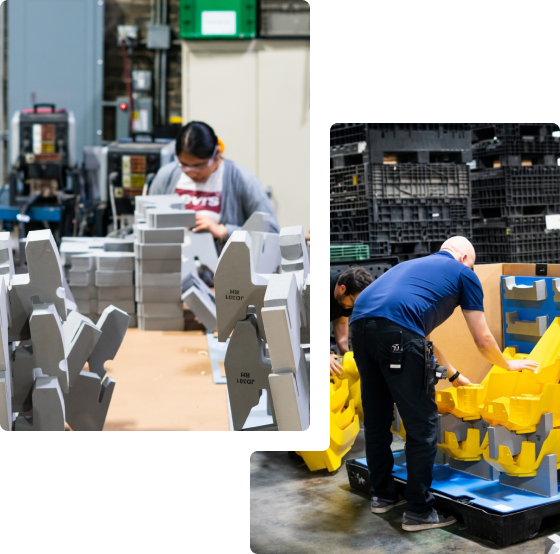
The outcome of a custom packaging project is set before a single container is designed. It is determined by the quality and completeness of the inputs gathered at the front of the project: the part’s true physical behavior, the requirements that do not appear on a drawing, the production and line-side environment, the logistics, and the people who each hold part of the decision. When those inputs are captured early, the project moves cleanly. When they are incomplete, the concept gets designed, gets rejected by the customer’s stakeholders, and the work loops backward with time and budget already spent. This paper lays out the categories of input that determine a packaging outcome, why the concept phase carries the most risk, and how a disciplined front end surfaces the hard inputs before design begins. It uses one real program, a first-of-its-kind assembled and pre-filled brake system for a motorcycle manufacturer, to show how the least obvious inputs, such as fluid orientation and the elevation needed to prevent air from entering a system in transit, can determine the entire design.
WHY IT MATTERS
The front of the project is riskiest because it is where information is least complete, and decisions are hardest to reverse. Packaging failure rarely begins as a design error. It begins as an input gap: a requirement that surfaced late, a stakeholder who was never consulted, or a part behavior that a 3D model could not reveal. Those gaps stay hidden until a concept is presented, and only then force the team back into rework.
The principle behind this is simple to state and easy to underestimate: the output is only as good as the inputs. A brilliant design built on incomplete inputs is still the wrong design. What separates a clean program from a stalled one is the rigor of the intake, not the cleverness of the concept.

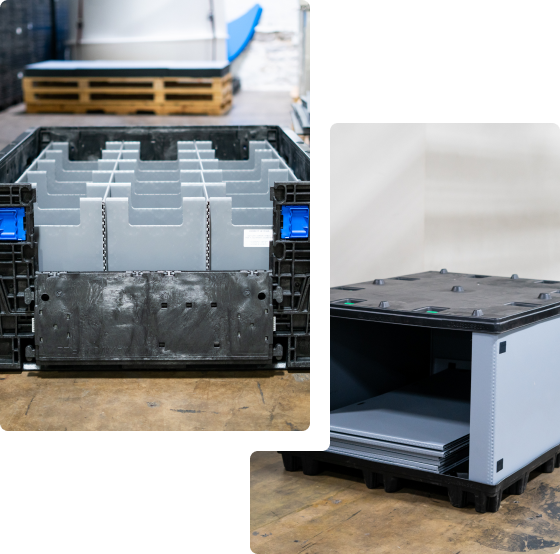
Returnable packaging engineering is a specialized field learned on the floor and in the field rather than in a classroom. The engineer gathering data and requirements is often one of the few people in the room who knows which non-obvious questions to ask. Later in the process, the design is validated through real-world ship testing or against the industry-recognized distribution-testing standards, primarily ASTM and ISTA. That lab testing is typically run by the customer’s third-party lab or their own in-house capability.
THE FRAMEWORK
A packaging outcome is determined by five categories of input, and the ones that cause the most trouble are rarely the obvious ones.
01
Geometry, weight, and centers of gravity, including the things a model cannot show about how a part settles and moves. Two parts that look alike on screen can behave very differently once mass distribution is accounted for.
02
This is where projects are won or lost. Cosmetic or Class-A surfaces, safety constraints, ergonomic needs, and physical properties of the part that change everything. In the brake program, the decisive requirement was invisible on any drawing: the assemblies were filled with fluid, so they could not be packed on geometry or density alone. They had to be oriented and held at specific elevations to keep air from entering the system during shipment and handling. An input like that does not surface unless someone knows to ask.
03
How the part is used at the line, the assembly sequence, the space available at both the supplier and the receiving plant, and the daily rate the packaging has to keep pace with.
04
Shipment frequency, lane distance, and how the pack uses the trailer. A pack that ignores cube leaves freight savings on the table for the life of the program.
05
The decision spans procurement, safety and ergonomics, engineering, and operations. If the person supplying inputs has not secured alignment across that group, the inputs are incomplete by definition, and the gap does not show until the concept is presented internally.
IN PRACTICE
When complete inputs overturn the original plan, the plan changes and the project is better for it. Catching that early is the difference between a redesign and a field failure. A common starting goal is a single packaging solution that serves every variant of a product, and deep inputs often reveal that variants differ enough in geometry, orientation, or handling that one solution cannot serve them all.
The brake program followed exactly this arc. The initial goal was one common solution for every vehicle platform. As part geometry, orientation constraints, elevation requirements, and installation sequence came into focus, it became clear a single solution could not serve every configuration. Rather than force it, the design held a common primary container and varied the dunnage to the part, with the rollout leading on the highest-volume platform. That is an input-driven outcome.
For the full story of this program, including the fluid-orientation constraint and the returnable pack that made a fully assembled delivery possible, see our case study: Taking Bleeding Off the Line.
HOW IT WORKS
A disciplined front end is built to force the non-obvious inputs into the open before design effort is spent. In practice that means five moves:
01
Qualify needs against wants so the design targets real constraints rather than preferences.
02
Bring the right people in early so cosmetic, safety, ergonomic, and freight requirements shape the first concept instead of breaking a later one.
03
Run a density study before committing to design so stakeholders approve the fundamentals, footprint and orientation, on something concrete.
04
Engineer the concept to the confirmed inputs, including the physical constraints that a drawing does not carry.
05
Sample and validate against real conditions so the solution is proven before it scales.
The payoff is not only a better pack. It is a shorter timeline, fewer redesign loops, and a solution that survives the customer’s own internal review the first time it is shown.
THE TIMELINE
Front-end rigor does not mean a slow program. A typical new-program timeline runs 10 to 12 weeks from complete inputs through design, sample, review, and release, with production and material lead times of 4 to 6 weeks after that. Timelines stretch when the problem is genuinely novel. The brake program ran far longer, from first inputs in early 2012 to production in 2013, precisely because it was the first time anyone had shipped a fully assembled, pre-filled brake system, and the inputs themselves had to be discovered. The lesson is that the timeline scales with how novel and input-heavy the problem is, not with how much time the front end takes.
HOW WE WORK
The intake discipline in this paper is built into PSi’s six-step process: Opportunity, Engineer the Solution, Validate, Quote, Order Confirmation, and Order Fulfillment. Inputs are gathered and qualified during Opportunity, and the density study and concept happen in Engineer the Solution, before commitment.
The quality of a packaging program is set at the front, not the finish. The teams that treat intake as the real engineering, and that know which non-obvious inputs to chase, are the ones whose first concept survives contact with the customer’s stakeholders. As assembled, ready-to-install deliveries and automated handling grow more common, the number of non-obvious inputs per program only rises, which makes front-end discipline more valuable, not less.
Most redesigns trace to inputs that were incomplete or surfaced late, such as an orientation, cosmetic, or stakeholder requirement that appeared only after a concept was presented.
The part’s true physical behavior, the requirements that are not on the drawing, the production and line-side environment, the logistics and truck cube, and confirmed buy-in from every stakeholder who holds part of the decision.
Not always. When variants differ in geometry, orientation, or handling, a common primary container with variant-specific dunnage often works better than forcing a single design.
Typically 10 to 12 weeks from complete inputs to release, plus 4 to 6 weeks production. Novel, first-of-its-kind programs run longer because the inputs themselves have to be discovered.
About Us
Packaging Solutions, Inc. is a custom packaging engineering company founded in Milwaukee in 1994. For 32 years, PSi has engineered and built returnable packaging systems for manufacturers whose production cannot afford a packaging failure, with engineering and the manufacturing floor under one roof.
PSi’s senior packaging engineers hold four-year packaging degrees, while returnable packaging itself is a discipline taught nowhere academically and learned on the floor across decades.

It’s our name. It’s our business!
Packaging Solutions, Inc.
Milwaukee, Wisconsin
We respond within 1 business day.
© 1994–2026 Packaging Solutions, Inc.